The Shift Is Already Happening. Are You Leading It or Lagging Behind?
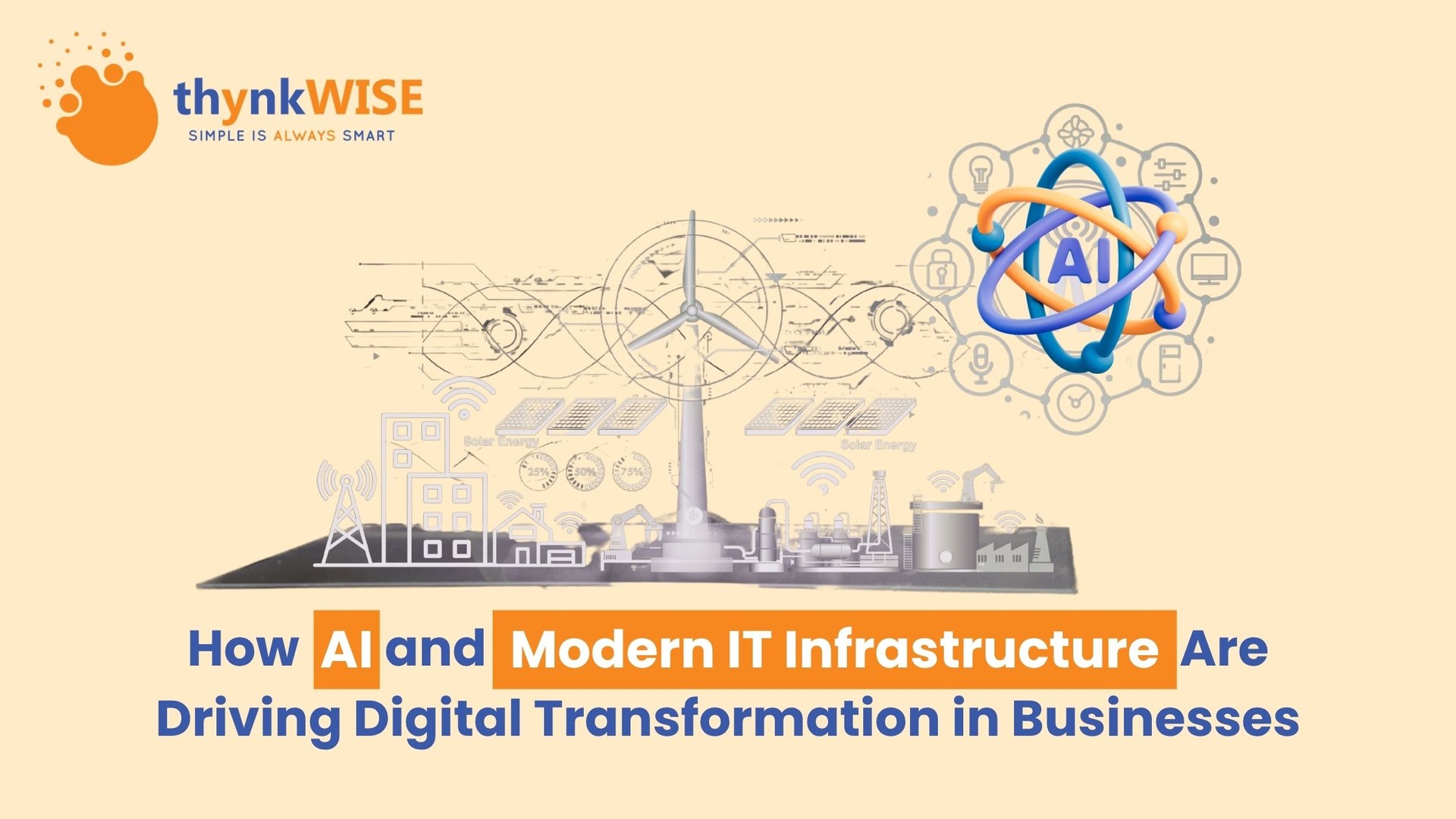
Artificial Intelligence and modern IT infrastructure are no longer future-state concepts discussed in boardrooms. They are the operating reality of every high-performing business in 2025. Companies that have already embedded AI into their technology stack are not just running faster. They are competing in an entirely different league.
The question is not whether your business needs AI-driven IT infrastructure. The question is whether you can afford to keep running without it. Every day a competitor automates what your team does manually, they compound their advantage. Every quarter you delay your cloud strategy, your infrastructure debt grows heavier.
This blog breaks down exactly how AI and modern IT infrastructure are reshaping business operations, what the real advantages look like in practice, and how organizations of all sizes can build a transformation roadmap that actually delivers results.
Key Ways AI and IT Infrastructure Are Reshaping Business Operations
1. Automation of Repetitive Processes
One of the most immediate and measurable benefits of AI is its ability to eliminate the manual, repetitive tasks that drain your team's time and energy. Data entry, invoice processing, report generation, workflow approvals, compliance documentation. These are not strategic activities. Yet they consume anywhere from 20 to 40 percent of an average employee's workday.
AI-powered Robotic Process Automation tools and intelligent workflow engines handle these tasks at machine speed, with near-zero error rates. The result is not just efficiency. It is a fundamental shift in how your people spend their time. When your team stops fighting administrative overhead, they start driving innovation.
Organizations that have deployed intelligent automation report average productivity gains of 30 to 50 percent in the processes they automate. That is not a marginal improvement. That is a structural advantage.
2. Data-Driven Decision Making
Businesses generate staggering volumes of data every single day, covering customer interactions, sales transactions, operational logs, and market signals. Without the right tools, this data sits in silos and generates reports that are already outdated by the time someone reads them.
AI-powered analytics changes the game entirely. Machine learning algorithms process real-time data streams, identify patterns invisible to the human eye, and surface predictive insights that inform decisions before events unfold. Demand forecasting, churn prediction, pricing optimization, supply chain risk modelling. These capabilities are now accessible without a team of data scientists.
The businesses winning in 2025 are not the ones with the most data. They are the ones making faster, more accurate decisions with it. AI gives you that edge.
3. Scalable Cloud Infrastructure
Traditional on-premise IT infrastructure is a financial anchor. Large capital expenditure on hardware that depreciates, requires constant maintenance, and cannot flex with business demand is a model that no longer makes sense for most organizations.
Cloud computing across IaaS, PaaS, and SaaS models fundamentally changes the infrastructure equation. You consume what you need, scale when demand spikes, and pay only for what you use. Cloud platforms also provide the raw computing power that AI workloads demand, including GPU clusters for model training, distributed storage for big data, and global edge networks for low-latency applications.
A well-architected cloud strategy does not just reduce cost. It creates the foundation for every AI capability your business will need, both today and three years from now.
4. Stronger Cybersecurity Frameworks
As your digital footprint expands, your attack surface grows with it. Traditional perimeter-based security, including firewalls, signature-based antivirus, and reactive incident response, is simply insufficient against modern threat actors. Ransomware, supply chain attacks, insider threats, and advanced persistent threats operate at a speed and sophistication that human analysts cannot match alone.
AI-powered Security Information and Event Management systems change the security posture from reactive to proactive. These platforms ingest billions of events, correlate anomalies in real time, and flag threats within seconds rather than hours. Machine learning models trained on global threat intelligence can detect zero-day attack patterns before signatures are even published.
For businesses handling sensitive customer data, financial records, or regulated information, AI-driven cybersecurity is not a luxury. It is a compliance requirement and a trust asset.
5. Enhanced Customer Experience
Customer expectations have shifted permanently. Today's buyers expect personalized, responsive, and consistent experiences across every touchpoint, covering the period before the sale, during onboarding, and throughout the lifetime of the relationship.
AI enables organizations to deliver this at scale without proportionally scaling headcount. Intelligent chatbots handle first-line support around the clock. Recommendation engines analyze behavioral data to surface the right offer at the right moment. Sentiment analysis tools flag at-risk customers before they churn. Predictive analytics identify upsell opportunities with surgical precision.
The businesses that dominate customer experience in the next decade will not be those with the largest support teams. They will be the ones that deployed AI to make every customer interaction smarter, faster, and more relevant.
Advantages of Integrating AI with IT Infrastructure
Organizations that successfully integrate AI with modern IT infrastructure realize measurable advantages across every business function:
Improved operational efficiency through intelligent automation of repetitive tasks
Faster and smarter decision-making powered by real-time AI analytics
Greater scalability and reduced infrastructure cost through cloud adoption
Proactive cybersecurity with AI-driven threat detection and response
Personalized customer experiences delivered at enterprise scale
Accelerated innovation cycles and reduced time-to-market for new products
Significant return on technology investment when strategy and execution align
Limitations and Challenges to Plan For
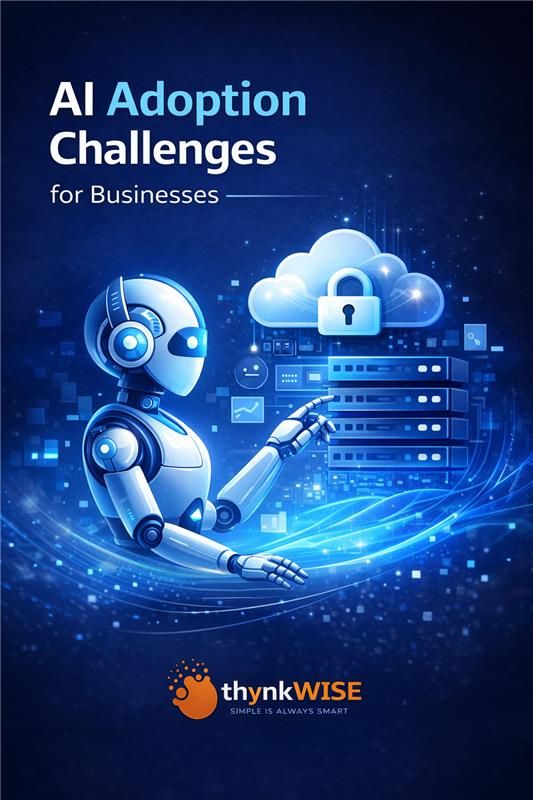
No transformation is without friction. Organizations must plan realistically for the challenges ahead:
High initial implementation costs for enterprise-grade AI systems and cloud migration
Data privacy and governance requirements, especially in regulated industries
Skill gaps in AI engineering, cloud architecture, and data science
Legacy system integration complexity and technical debt
Change management and organizational resistance to new workflows
Ethical and regulatory concerns around AI decision-making transparency
These challenges are real, but they are not blockers. They are planning inputs. With the right technology partner and a phased implementation strategy, every one of these challenges has a clear path to resolution.
Traditional IT Systems vs. AI-Driven IT Environments
Aspect | Traditional IT Systems | AI-Driven IT Systems |
Decision Making | Manual analysis and reporting | Automated insights and predictive analytics |
Operations | Human-dependent processes | AI-powered automation |
Scalability | Limited by physical infrastructure | Cloud-based and highly scalable |
Security | Reactive monitoring | Proactive threat detection using AI |
Efficiency | Moderate operational efficiency | Highly optimized intelligent systems |
This comparison is not theoretical. The gap between traditional and AI-driven IT environments compounds every year. Organizations still running legacy infrastructure in 2026 are not just inefficient. They are structurally disadvantaged.
Real-World Impact Across Industries
The transformation is already underway across every major sector:
Retail: AI analytics platforms process customer purchase history, browsing behavior, and seasonal trends to optimize inventory, personalize recommendations, and reduce return rates by up to 25 percent.
Financial Services: AI-powered fraud detection systems analyze thousands of transaction variables in milliseconds, catching anomalies that rules-based systems miss entirely.
Healthcare: AI diagnostic tools assist clinicians by flagging abnormalities in imaging data, reducing diagnostic errors and accelerating treatment decisions.
Manufacturing: Predictive maintenance systems monitor equipment sensor data in real time, predicting failures hours or days before they occur and reducing unplanned downtime by 30 to 45 percent.
Logistics: AI route optimization and demand forecasting tools reduce fuel costs, improve delivery accuracy, and enable dynamic capacity planning.
These are not pilot projects. These are production deployments delivering measurable business outcomes. The technology is proven. The question is execution.
Frequently Asked Questions
Why is AI important for modern businesses?
AI enables businesses to automate high-volume processes, extract predictive insights from large datasets, and make faster, more accurate decisions. It also allows organizations to do more with existing resources, improving margins while scaling output.
How does cloud infrastructure support AI technologies?
Cloud platforms provide the on-demand computing power, distributed storage, and elastic scalability that AI workloads require. Without cloud infrastructure, enterprise-grade AI deployment is cost-prohibitive for most organizations.
Can small and medium-sized businesses adopt AI solutions?
Yes. Cloud-based AI services have democratized access to capabilities that previously required enterprise budgets. SMEs can now implement AI-powered CRM analytics, automated marketing tools, and intelligent customer service platforms at a fraction of the legacy cost.
Which industries benefit most from AI-driven IT systems?
Finance, healthcare, retail, logistics, and manufacturing see the highest direct return on investment. Any business that generates operational data, manages customer relationships, or runs repeatable processes has meaningful AI opportunities to capture.
How long does a typical digital transformation take?
It depends on the scope and starting point. A focused AI implementation in a single function, such as sales automation or cybersecurity monitoring, can go live in 60 to 90 days. An enterprise-wide transformation spanning cloud migration, AI integration, and process redesign typically runs 12 to 36 months in phases.
Conclusion
The integration of Artificial Intelligence and modern IT infrastructure is not a technology trend. It is a fundamental restructuring of how competitive businesses operate. Organizations that move deliberately and strategically on this transformation will compound their advantages year over year.
Those that wait will find the gap increasingly difficult to close.
Successful digital transformation requires more than deploying tools. It demands the right strategy, the right infrastructure architecture, the right implementation partner, and a clear-eyed view of both opportunity and risk. That is where execution makes all the difference.
Ready to Build Your AI-Powered IT Infrastructure?
thynkWISE is a full-spectrum IT solutions provider helping businesses across India design, deploy, and manage AI-ready infrastructure. From cloud migration and SIEM security integration to AI avatar deployments and enterprise IT managed services, we deliver end-to-end technology execution.
Whether you are modernizing a legacy stack, scaling your cloud environment, or implementing AI-driven security, our team brings the technical depth and the strategic thinking to get it done right.
Talk to thynkWISE TechBridge
AI-Ready Infrastructure | Cloud | Cybersecurity |
Managed IT Services | AI Chatbots and Avatar Solutions
Your Last IT Call. Ever.
Contact us: [email protected] | www.thynkwise.co.in | +91 91379 06121
Need a Strategy to Make Your Digital Transformation Stick?
Technology without execution strategy is just expensive experimentation. thynkWISE Advisors is India's leading sales and execution consulting firm, helping businesses align their technology investments with revenue outcomes, sales process design, and scalable growth frameworks.
If your organization is adopting AI tools but not seeing them translate into pipeline, revenue, or customer retention, the gap is not the technology. It is the execution strategy. We fix that.
Work with thynkWISE
Sales Process Optimisation | CRM Implementation and Strategy
AI-to-Revenue Alignment | Fractional CSO Services
Execution Consulting for High-Ticket B2B Businesses
[email protected] | www.thynkwise.co.in | +91 91379 06121
thynkWISE Advisors Private Limited. All rights reserved.